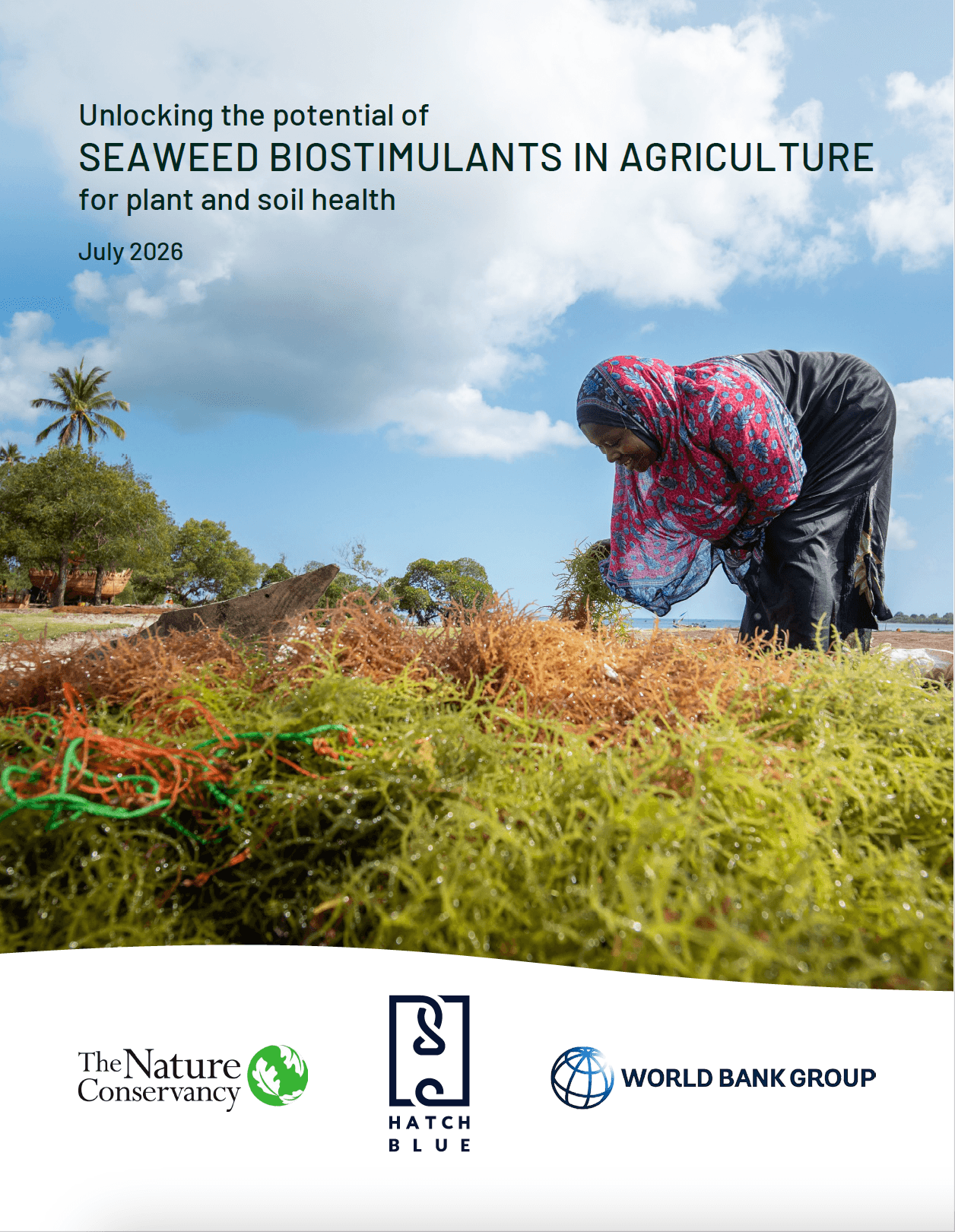
This white paper examines how seaweed-derived biostimulants can support more productive, resilient, and sustainable agriculture.
It covers:
- What they are: Products that stimulate plants’ natural nutrient uptake and stress-response mechanisms, rather than directly supplying nutrients like fertilizers.
- Agricultural benefits: Evidence that they can improve crop growth, yield, quality, nutrient efficiency, soil health, water retention, and tolerance to drought, salinity, and temperature extremes.
- Use and production: Active compounds, application methods such as foliar sprays, soil treatments, and seed priming, plus how species choice, cultivation, harvesting, and processing affect product quality.
- Sustainability: Potential to reduce dependence on synthetic fertilizers and pesticides, lower agricultural emissions, and create marine ecosystem benefits when seaweed is responsibly farmed.
- Market opportunity: A growing global market, projected to exceed USD 2.4 billion by 2030, with potential for coastal jobs, local value chains, and investment.
- Barriers to scale: Variable product performance, high costs, limited reliable feedstock, fragmented regulations, insufficient standards and certification, and the need for stronger farmer-facing evidence.
- Recommendations: Streamline regulation and permitting; fund R&D, field trials, hatcheries, processing, and biorefineries; establish quality, traceability, and sustainability standards; encourage cross-sector collaboration; and use incentives to support adoption and investment.
Overall, the document presents seaweed biostimulants as a promising tool for climate-smart farming, but stresses that coordinated action by farmers, researchers, industry, governments, and investors is needed to scale them responsibly.